Periodontal disease and EvoSolution
If you do lose teeth due to periodontal disease, then the bone that was there supporting the tooth previously, will be destroyed and start to recede, leaving you with considerably less bone in your jaw.
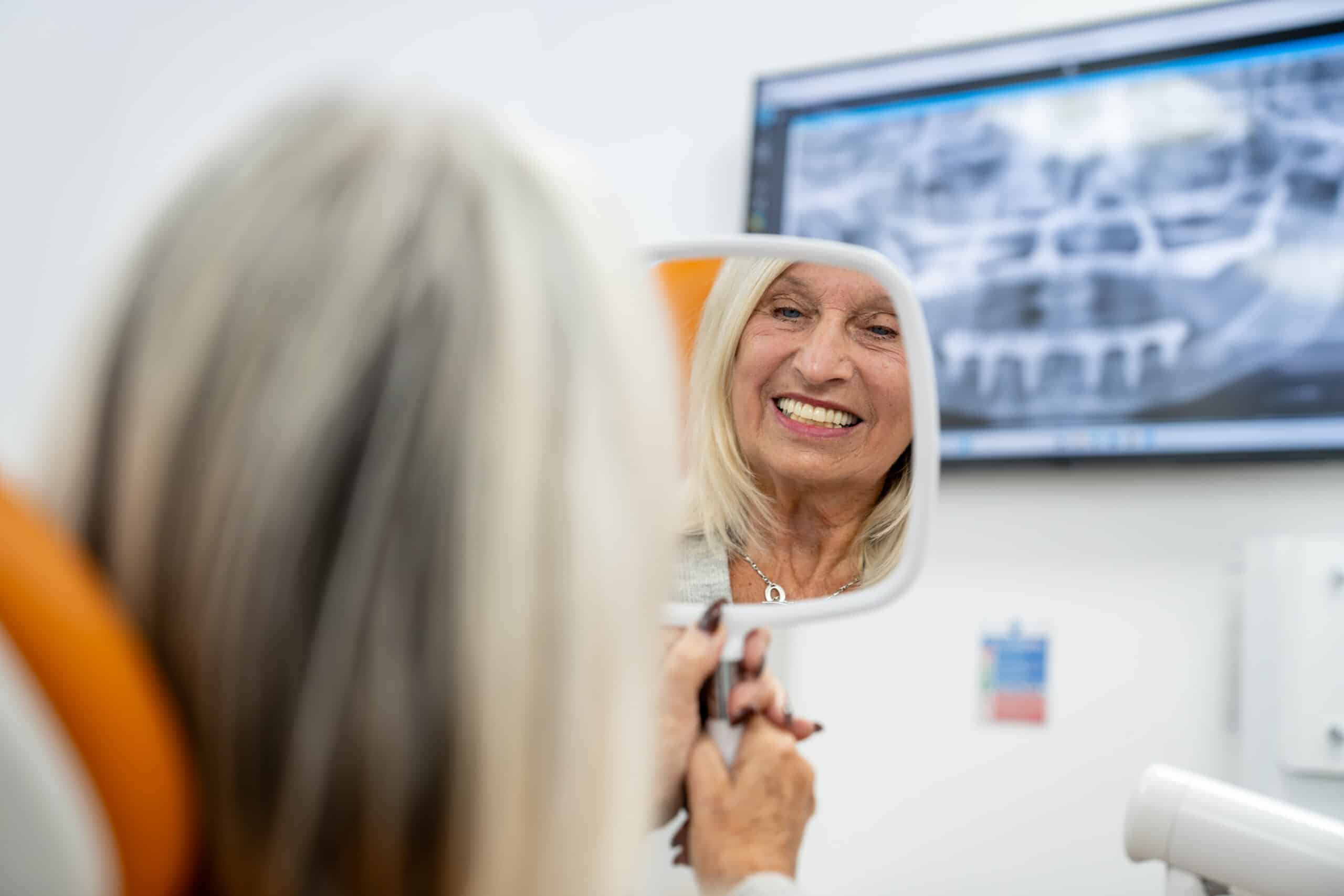
When losing teeth due to periodontal disease, you may be looking for a solution to replace those lost teeth. Traditionally, dentures have been the solution, with dental implants being ruled out due to the loss of bone.
But dentures can often be ill-fitting, sometimes painful and you can get food stuck in them when you’re trying to get your favourite baguette! Add to that, they need fixing with adhesive every morning, and sometimes after food, which needs to then be cleaned off every night.
EvoSolution
On top of that, you’ve probably heard from your dentist that dentures are your only option, probably to the lack of bone available for dental implants to be implanted.
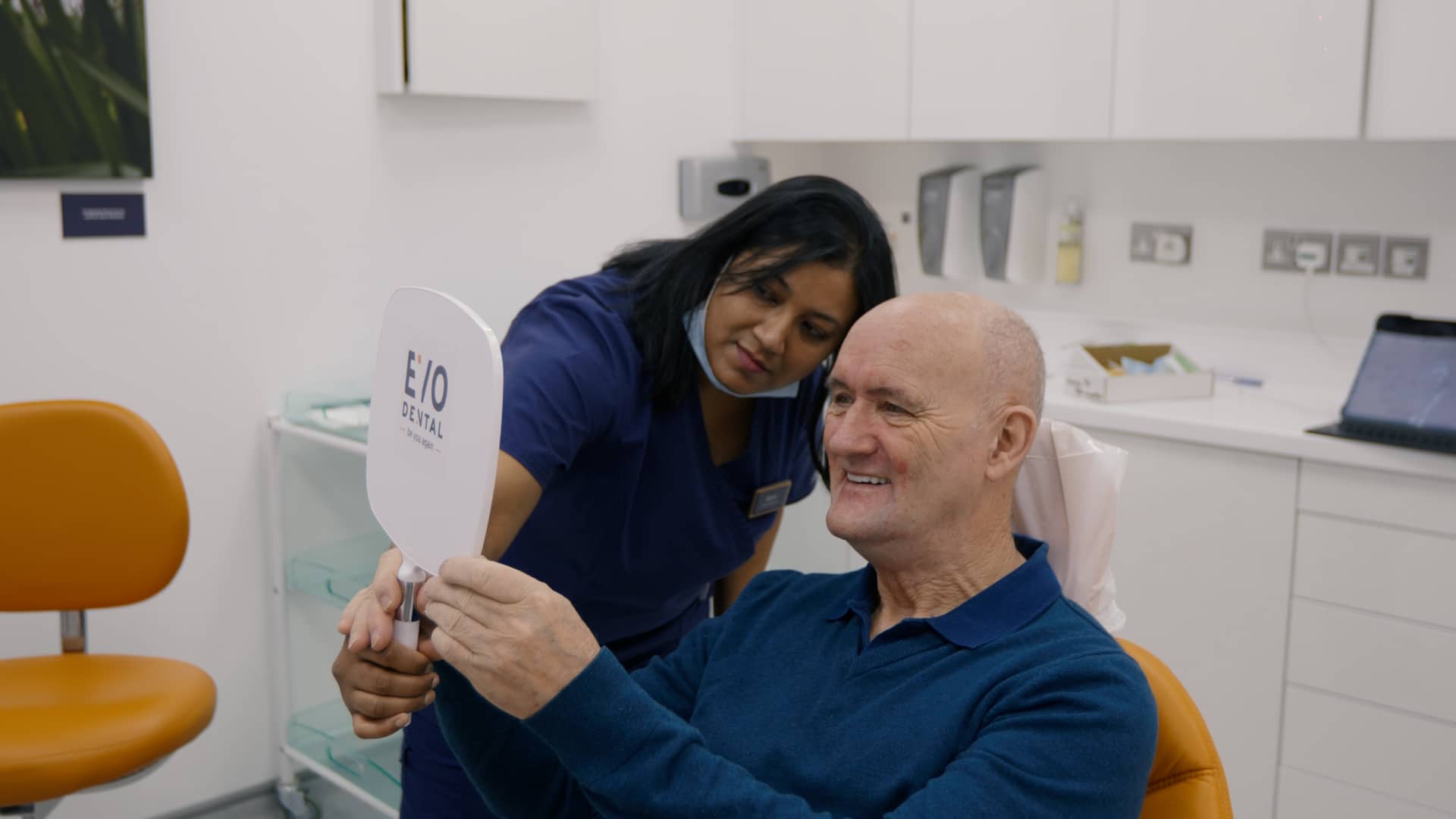
That is no longer the case because, here at EvoDental, we have developed an innovative and advanced alternative to all-on-four dental implants – the EvoSolution – which is one of the only rehabilitation treatments specifically designed to help with challenging dental situations.
EvoSolution, as an advanced alternative to all-on-four dental implants, utilises pterygoid implants to support full jaw implant prosthetics. With our on-site, purpose-built laboratories, our specialist teams can personally design one-piece, screw-retained prosthetics, which don’t require any bone grafting to be undertaken.
Dental Implants At EvoDental
In fact, dental implants can actually restore lost bone by the implant being attached, stimulating bone growth in the same way that a natural tooth would.
As our procedures involve full jaw – top or bottom or both – correction, we require no more than 5mm wide and 10mm high, and of adequate spread across the jaw. We use cone beam CT (CBCT) scanning – which is free during your free assessment – allowing us to evaluate the availability, position and quality of the smallest amounts of remaining bone.
The treatment plan that our dentists devise for you will solely be based on your needs and requirements, no-one else’s. You will find out on the day of your free consultation as to whether you are a candidate for our precision engineered fixed full-jaw dental implant restoration and you can soon be walking away with a smile in a day!
Which dental treatment is the best option for missing or failing teeth?
| EvoSolution™ – the advanced alternative to same day smile treatment | Overdentures | All-on-4 dental implants |
| Treatments are completed in one day – without sinus lifts or bone grafts | Treatment will involve multiple appointments and ends with a fixed denture | Usually involves bone grafts and will be completed over numerous trips to the clinic |
| Each arch is permanently held in place with 4 to 6 implants | 2 to 4 mini- implants are used to achieve overdenture support | Permanent results are achieved using 4 implants per upper or lower jaw |
| A bespoke, screw-retained prosthesis is fitted on surgery day – removing the need for temporary dentures entirely | Temporary dentures are necessary throughout your treatment journey | Temporary dentures and teeth are needed for the duration of your treatment |
| High-quality oral hygiene is more likely due to the design and fitting protocol of the arch | The size of the dentures and the need to remove them and clean the mouth after each meal can result in increasingly poor dental hygiene if neglected | Dental hygiene levels can vary depending on the clinic attended, the fitting procedure, and the experience of the dentist |
| Implant failure is extremely unlikely due to the strict design parameters and the resulting good-quality oral hygiene | Implant failure risk is increased by the three-times-a-day cleaning schedule | Depending on the clinic’s fitting protocols and experience levels, dental implant failure is possible |
| Dental implant consultations are free for all patients | Consultation costs regularly exceed £150+ per patient | Patients can expect to pay around £150+ per consultation |
| Longer, thinner arches reduce bulk, give more teeth per prosthesis, and leave the palate uncovered, providing the most function and aesthetics | A covered palate and substantial prosthetic can feel unnatural in the mouth | Arches can feature a reduced number of teeth and can feel bulky in the mouth |
| Smile-in-a-day single jaw prices range from £9,500, both jaws from £15,500. | Overdenture prices range from £10,000 – £16,000 with ongoing fees | All-on-four prices can range between £17,000 – £35,000 for the full mouth |
Request a free consultation
You can request a free consultation or contact us 0800 470 3051.

Periodontal Disease FAQs
What is periodontal disease?
Periodontal disease is a gum infection that, when left untreated, destroys the supporting bone around your teeth. Otherwise known as gum disease, this can cause teeth to loosen and fall out.
There are four stages of periodontal disease:
- Gingivitis
- Slight periodontal disease
- Moderate periodontal disease
- Advanced periodontal disease
How do I know if I have periodontal disease?
You are at risk from periodontal disease if you don’t have good dental hygiene habits, such as thoroughly brushing your teeth twice a day and flossing at least once a day.
You need to look out for a variety of symptoms such as:
- Bad taste in your mouth
- Bad breath
- Bleeding gums
- Pain when eating
- Loose teeth
- Teeth falling out
What are the main causes of periodontal disease?
The main cause of periodontal disease is poor dental hygiene, which causes plaque to build up on and around the teeth. Once this plaque hardens, it can result in bleeding gums, pain when chewing, and loose teeth, which may eventually fall out.
Other causes include:
- Smoking
- Obesity
- Poor nutrition
- Genetics
Is periodontal disease reversible?
The first stage of periodontal disease, known as gingivitis, is reversible. This presents itself as sore, swollen, and bleeding gums. Good dental health hygiene can reverse this stage.
The second stage, slight periodontal disease, is not reversible as it involves infection in the bone around your teeth, but the good news is that it is manageable. A visit to your dentist to have plaque and bacteria removed by planing and scaling can keep this under control.
The third stage, moderate periodontal disease, is diagnosed when the disease is more advanced and infection is found deeper in the gums. This time, the scaling and planing will take more than one sitting to be effective.
The final stage is advanced periodontal disease, and at this point, the only option will be to have the infection removed via dental surgery. All stages, apart from the first, are not reversible.